Transport Development Index
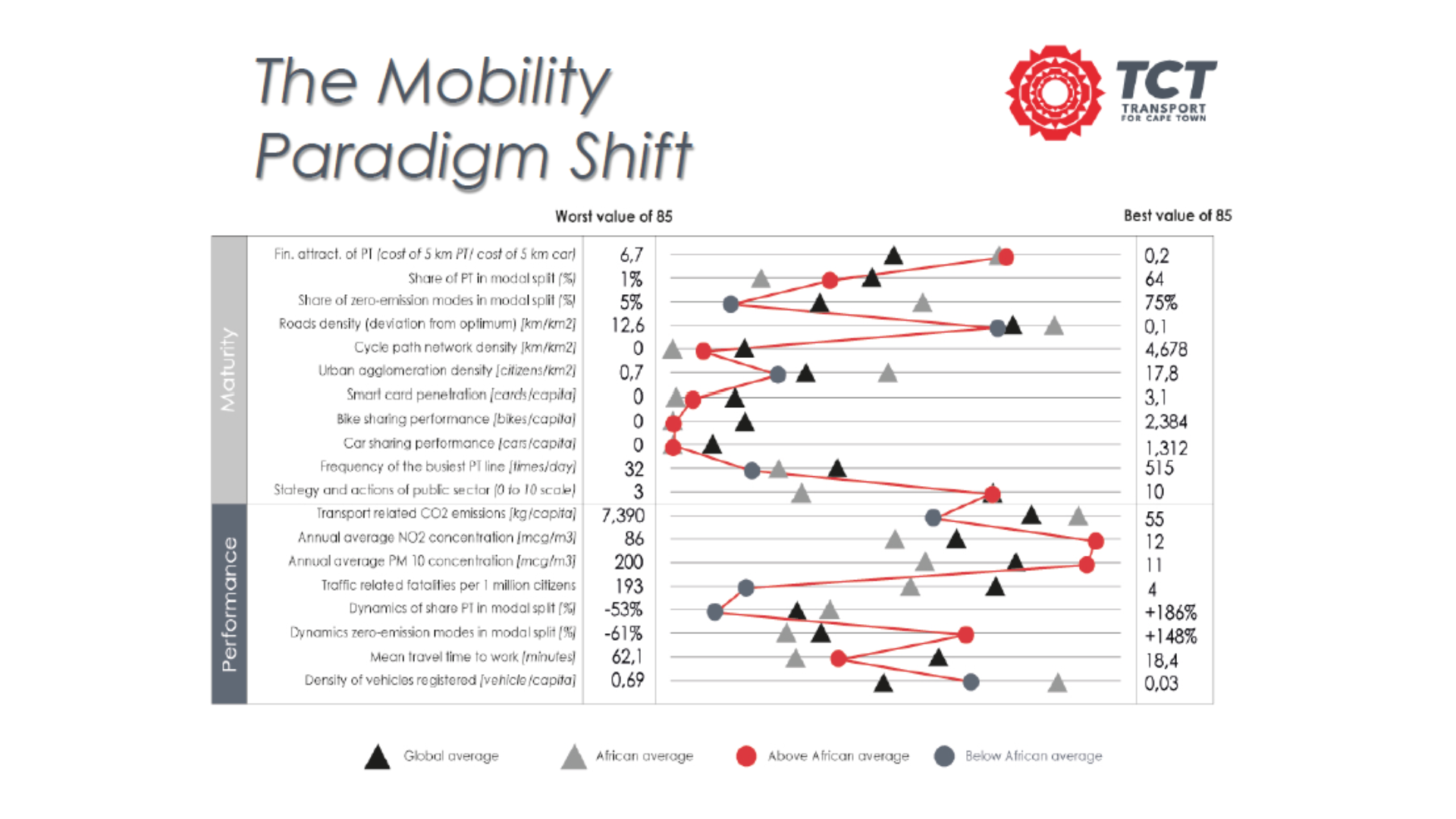
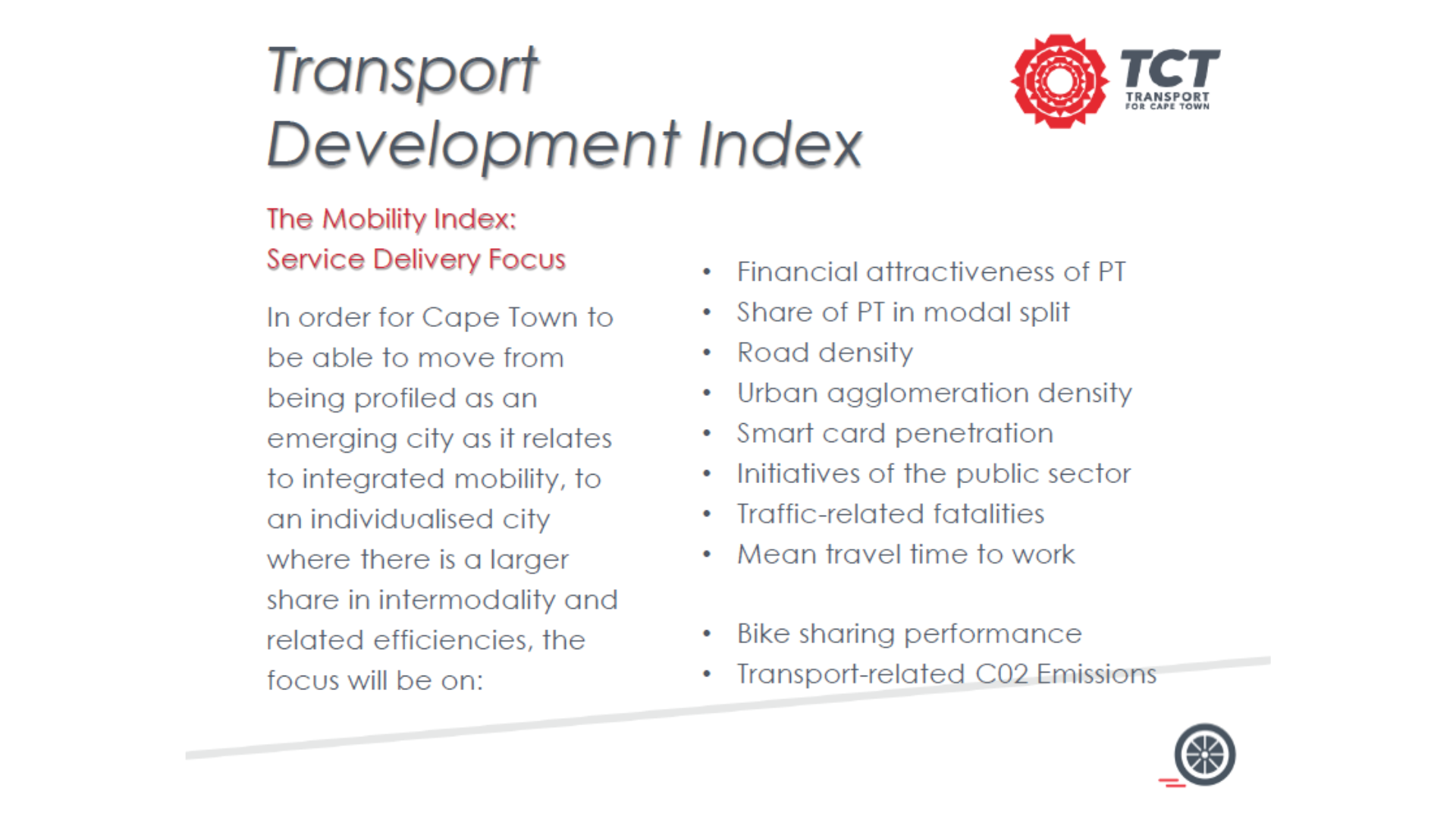
We were the lead innovator and developer who conceived and created the first-of-its-kind Transport Development Index (TDI), a groundbreaking statistical tool inspired by the principles of the Human Development Index (HDI).
Groundbreaking Tool Development: Designed and built the TDI to quantitatively measure the city's overall achievement and incremental progress toward a defined baseline of transport development.
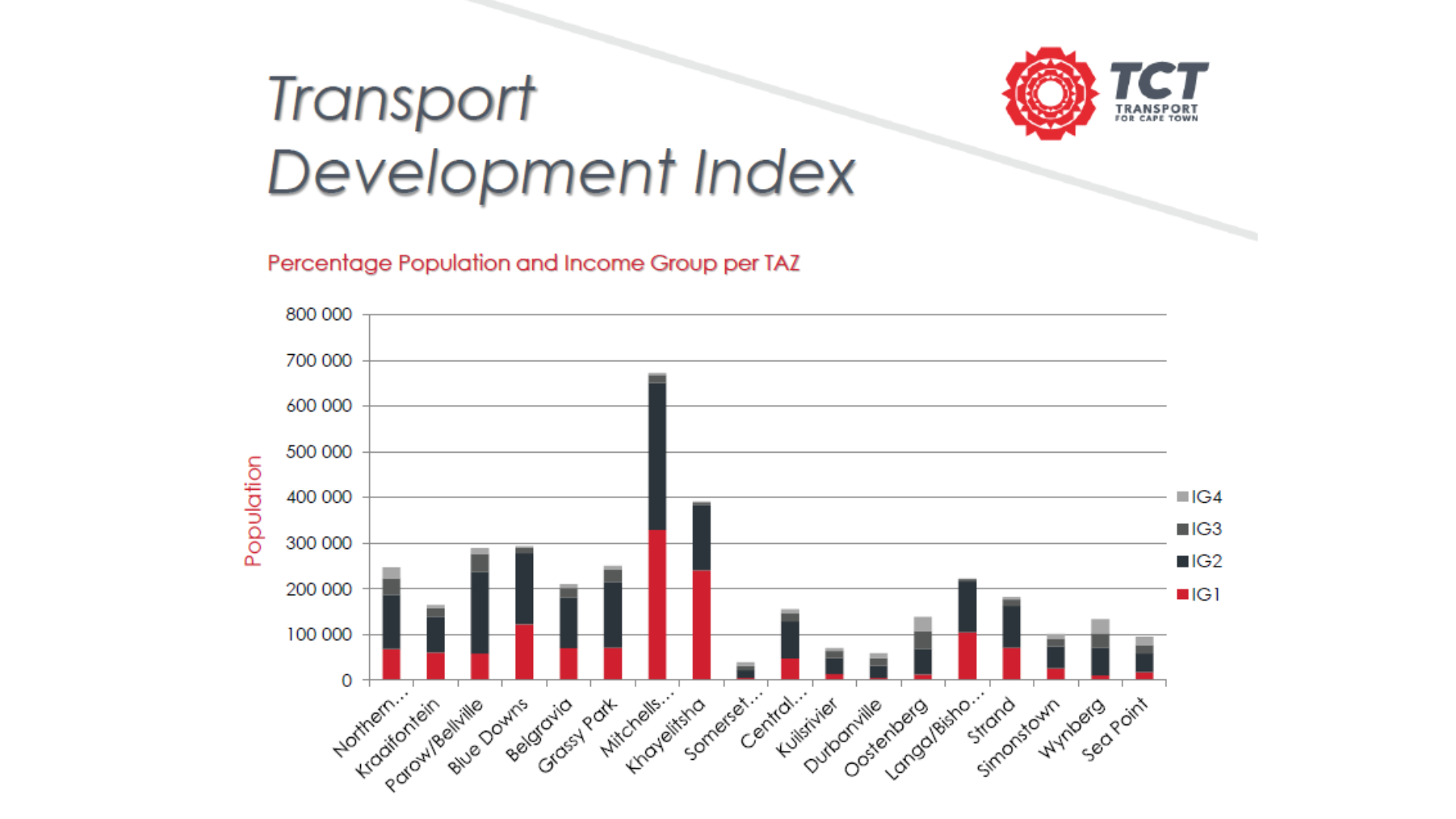
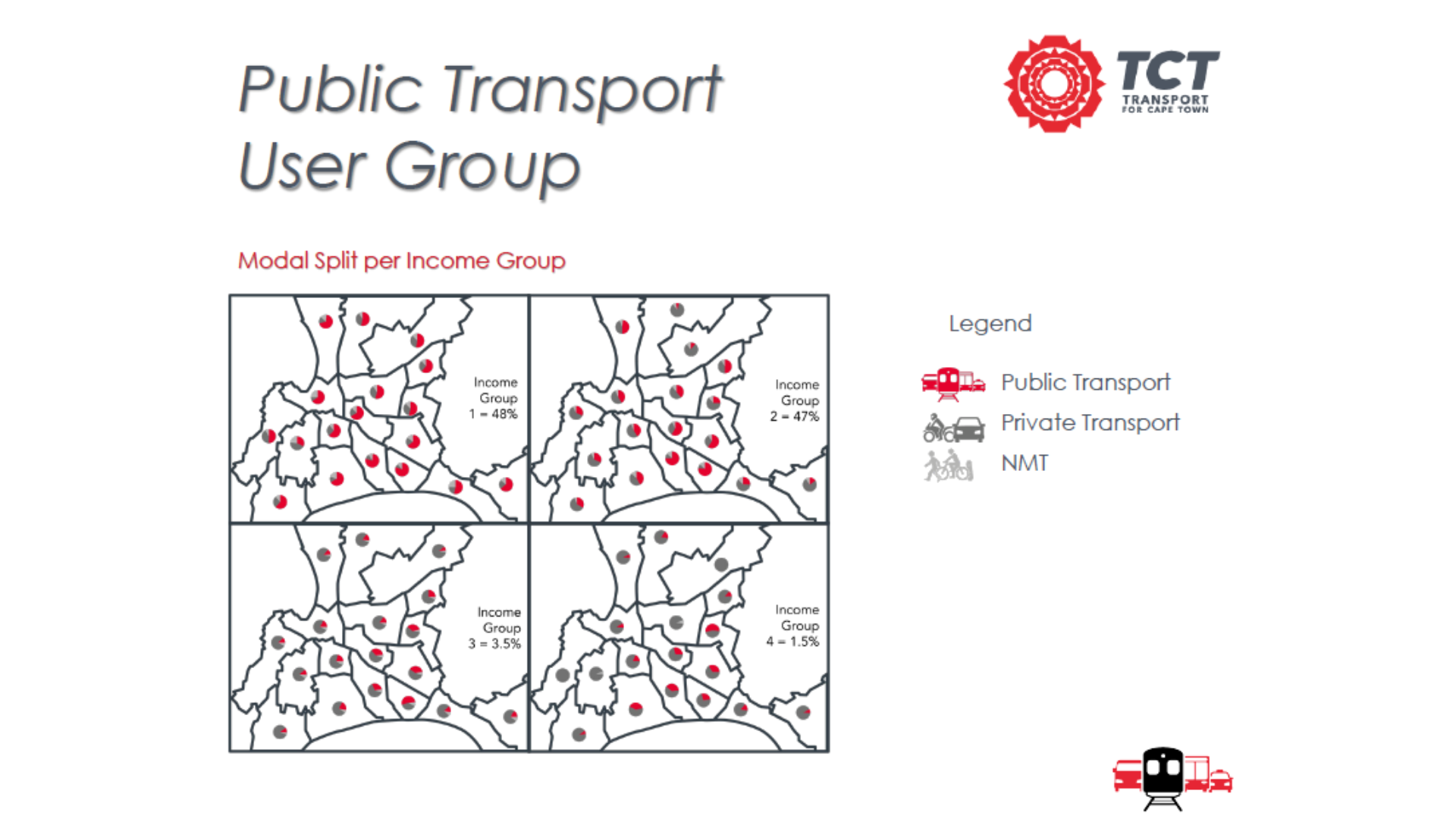
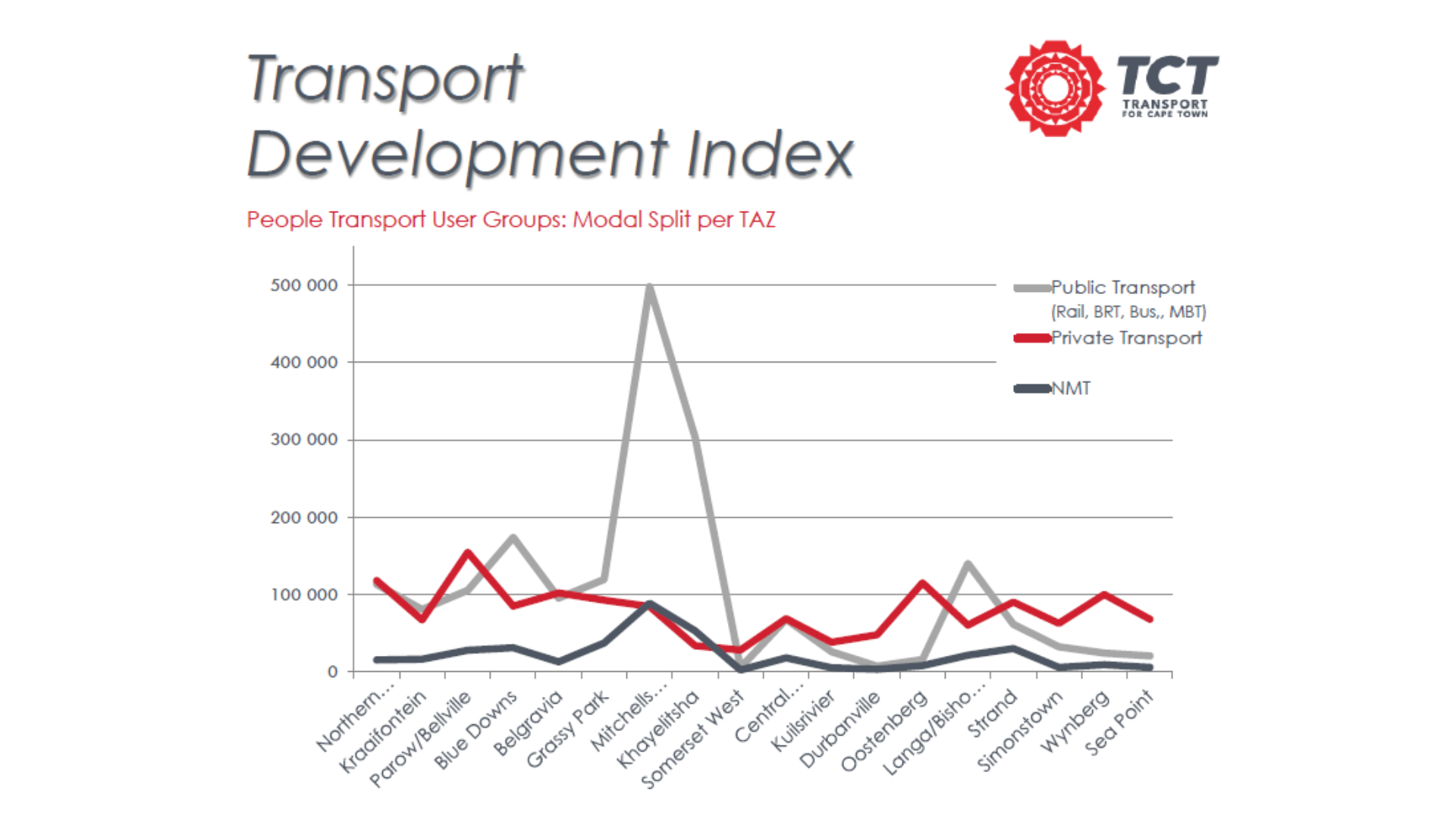
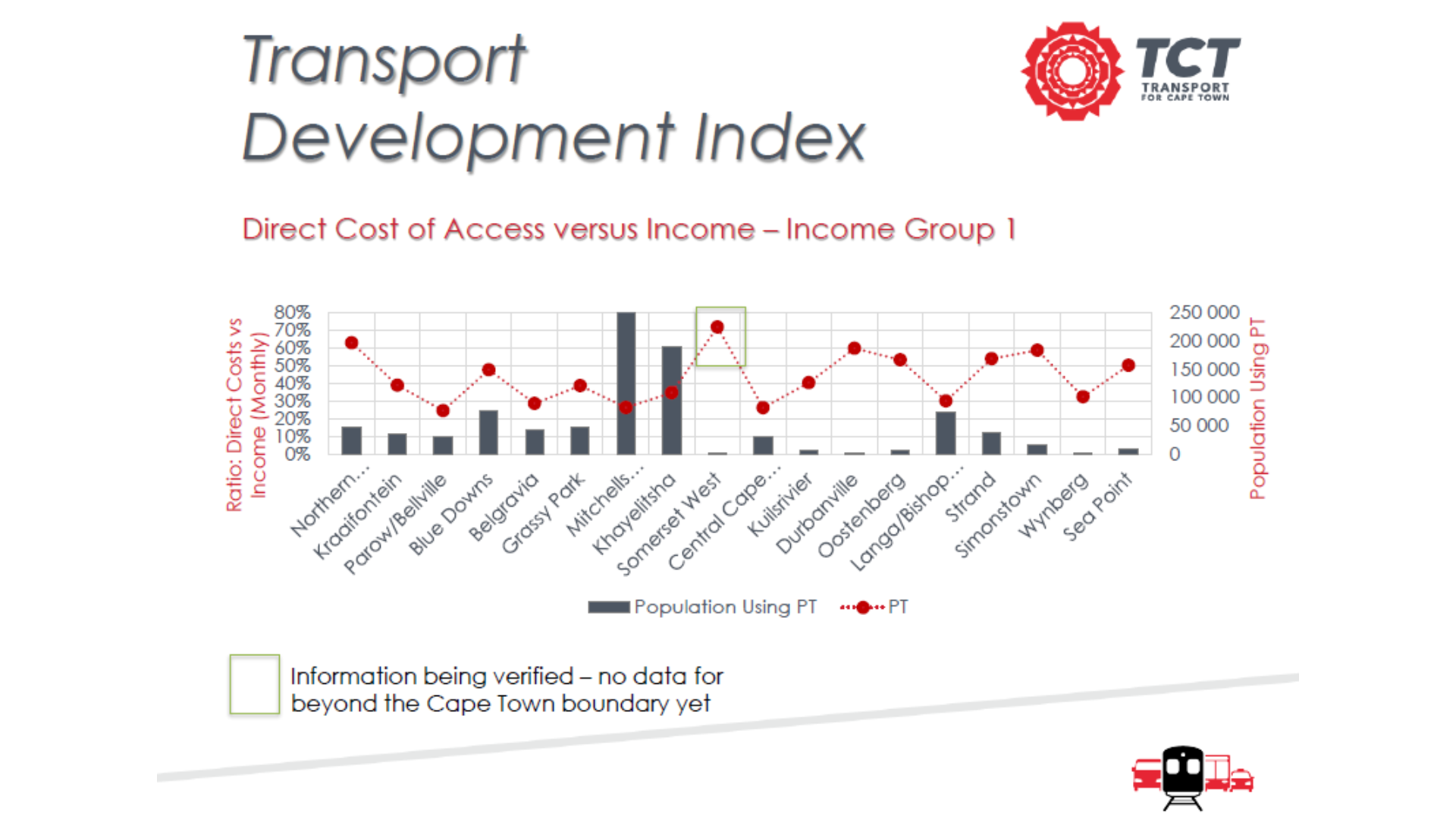
Multi-Dimensional Analysis Framework: The TDI’s methodology and measurement is based on raw data or quantifiable facts. The TDI was developed to systematically identify the access priorities of distinct user groups: Public Transport, Private Transport, Non-Motorised Transport and Freight; segmented by income category.
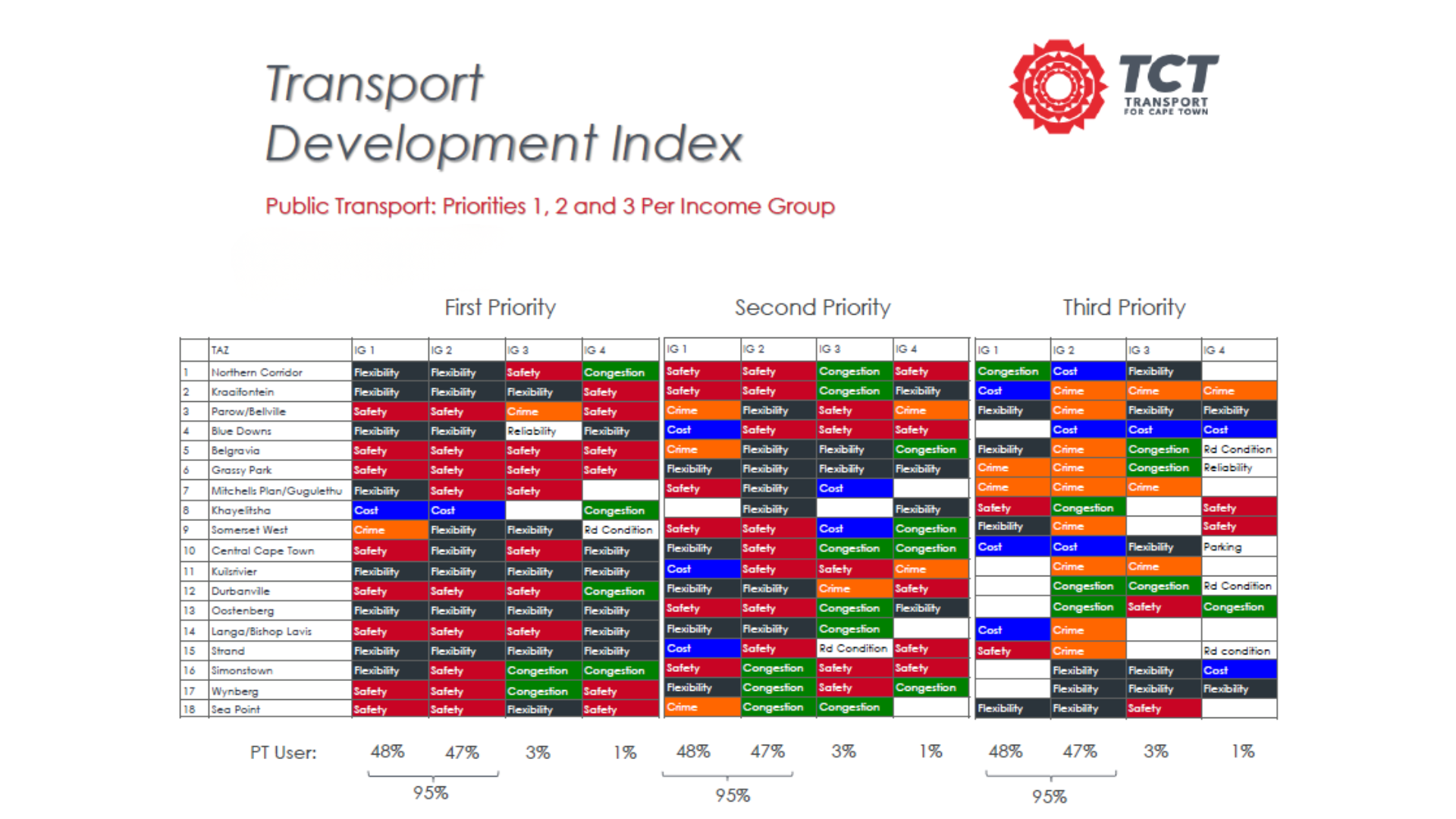
Holistic Cost Identification: The TDI uniquely accounts for both direct financial costs (e.g., fares, fuel) and indirect non-financial costs (e.g., time lost to congestion, safety risks, crime, lack of flexibility and reliability), providing a complete picture of the barriers to access.
Cities globally, and Cape Town specifically, have lacked a holistic, data-driven metric to measure and guide progress towards equitable and efficient transport systems. Traditional metrics focus on narrow outputs that are based on assumption rather than fact, failing to capture the true human and economic costs of transport inequity, thereby making it difficult to prioritise interventions based on their actual impact on citizens' access and quality of life across different income groups and transport modes.
The Challenge
Our Role & Action
Provided the City of Cape Town with the world's first integrated, data-driven metric to track transport equity and efficiency, shifting policy from infrastructure-centric to people-centric planning.
Enabled evidence-based, targeted interventions by clearly revealing which specific cost (financial or non-financial) was the primary barrier for each user and income group, ensuring resources address the most critical pain points.
Established a replicable model for measuring the human development outcomes of transport systems, offering a transformative framework for cities worldwide to diagnose inequities and prioritise investments that genuinely improve access and quality of life.
The Impact